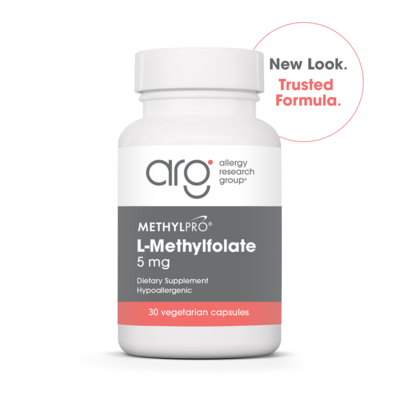
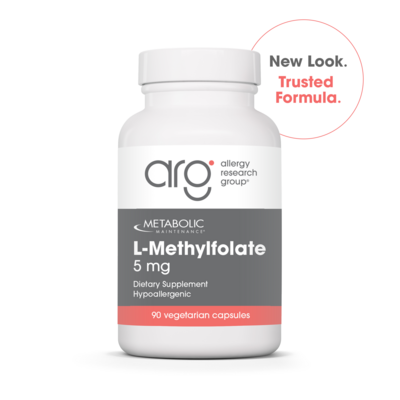
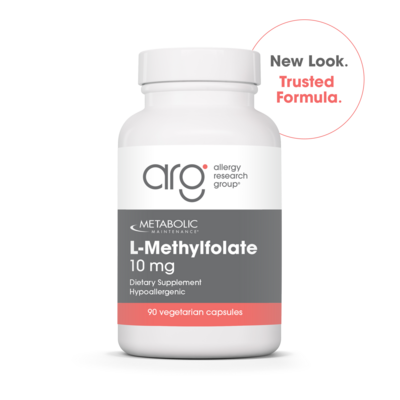
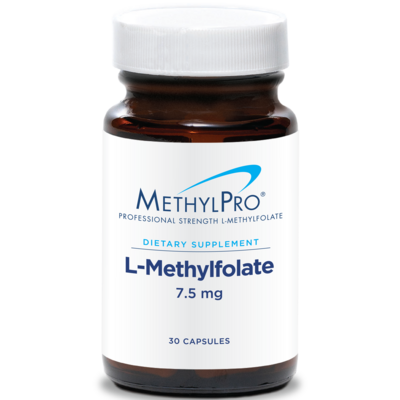
Active folate support for heart, mood, and metabolic health.*
What It Does
L-Methylfolate, an important methyl donor, provides the body’s most bioactive form of folate, supporting cardiovascular function, mood, and overall metabolic health.* By bypassing the MTHFR enzyme conversion step, it ensures optimal folate utilization for neurotransmitter synthesis, homocysteine metabolism, and cellular energy production.*
How It Works
L-Methylfolate (1 mg) — Delivers the active, methylated form of folate used directly in methylation and one-carbon metabolic pathways.* [1]
Supports Homocysteine Balance — Aids in the conversion of homocysteine to methionine, helping maintain cardiovascular health and normal endothelial function.* [1-3]
Promotes Neurotransmitter Synthesis — Provides a critical methyl donor for serotonin, dopamine, and norepinephrine production to support mood and cognitive function.* [4][5]
Enhances Energy and Metabolic Efficiency — Supports red blood cell formation and mitochondrial function for steady energy and healthy metabolism.* [6][7]
Who It’s For
Ideal for individuals seeking comprehensive, activated folate support for optimal energy, methylation balance, and neurological or emotional well-being.* Well suited for individuals with MTHFR polymorphisms, those seeking homocysteine balance, or have increased methylation demands due to physiological or environmental stress.*
Special Features
Features L-5-Methylfolate— the biologically active, clinically validated form of folate with superior absorption and bioavailability. Manufactured to rigorous quality and purity standards, free of common allergens and GMOs.
References
1. Carboni L, et al. Integr Med (Encinitas). 2022;21(3):36
2. Antoniades C, et al. Circulation. 2006;114(11):1193–1201
3. Willems FF, et al. Br J Pharmacol. 2004;141(5):825–30.
4. Shelton RC, et al. Prim Care Companion CNS Disord. 2013;15(4). doi:10.4088/pcc.13m01520
5. Maruf AA, et al. Pharmacopsychiatry. 2021;55(03):139-47.
6. Hanna M, et al. Permanente J. 2022;26(2):89-97. doi:10.7812/tpp/21.204
7. Xiu Y, Field MS. Curr Dev Nutr. 2020;4(10):nzaa153. doi:10.1093/cdn/nzaa153